


Cracked, chipped, or unstable stairs are more than just an eyesore. If ignored, they can become a safety hazard and lead to bigger structural issues. For homeowners in Minneapolis, knowing how to repair damaged precast concrete steps is essential, especially after years of exposure to freezing weather, road salt, and moisture.
At Richfield Concrete, we’ve helped countless homeowners restore and replace precast steps that have suffered from wear, impact, or settling. Whether you’re dealing with minor surface cracks or full structural damage, the good news is that in many cases, these steps can be repaired without needing complete replacement. Here’s what we recommend when assessing and fixing precast concrete stairs.
What Are Precast Concrete Steps?
Before discussing repairs, understanding the differences between precast steps and poured-in-place stairs is essential. This knowledge is crucial when hiring professionals for concrete repair and replacement.
Key Characteristics of Precast Steps
1. Manufactured off-site: Precast steps are made in a controlled environment and delivered to the job site.
2. One-piece units: They arrive as a single structure with treads and risers already formed.
3. Hollow core: Most precast stairs are lighter because they have a hollow center, which makes transport and placement easier.
4. Set on footings or piers: These steps must be installed on a solid base to stay level and stable.
Because they’re built off-site, precast steps offer excellent durability and clean lines, but they can still develop damage over time.
Three Common Signs of Damage in Precast Concrete Steps
The earlier you spot a problem, the easier and typically less expensive it is to correct. In the Twin Cities, precast steps take a predictable beating from winter conditions; the Minnesota Pollution Control Agency estimates 365,000 tons of road salt are applied in the metro area each year, and that salt is routinely tracked onto entry steps where it accelerates surface scaling and spalling over time.
This is why we carefully inspect every damaged set of steps to determine whether a targeted patch, a leveling/adjustment, or full replacement is the most reliable long-term option.
1. Cracking and Chipping
Concrete spalling, like surface cracks and edge chips, is the most common problem we see. These are usually caused by water infiltration followed by freeze-thaw cycles. While small cracks may not seem serious, they can allow moisture to penetrate deeper and cause long-term deterioration.
2. Spalling or Flaking Surface
When the concrete surface starts to peel or flake away, it’s often due to salt exposure or poor finishing techniques. This condition, called spalling, weakens the surface and affects the appearance and safety of the steps.
3. Settling or Sinking
If the base under your steps begins to shift or settle, the entire unit can become unlevel. This is not only unsightly, but it can also lead to dangerous tipping or cracking under load.
How We Repair Damaged Precast Concrete Steps
Each situation requires a slightly different approach, but here are the most effective methods we use to repair damaged precast steps and make them safe again.
Surface Crack Repair
We thoroughly clean the area for small cracks, a crucial step for effective repair. This meticulous process is essential, distinct from the initial care you’d take when you pressure wash new concrete. After cleaning, we fill the gap with a high-strength concrete patching compound or epoxy to seal it, prevent moisture intrusion, and restore surface integrity. These are the steps we take:
1. Clean the crack with a wire brush and pressure wash
2. Apply a bonding agent if needed
3. Fill the crack with patching material
4. Smooth and textured to match the existing finish
Chip and Corner Restoration
If the corners of the steps are chipped, we use a form to rebuild the shape with concrete repair mortar. Once cured, the patch is smoothed to blend with the surrounding area.
Addressing Settling and Support Issues
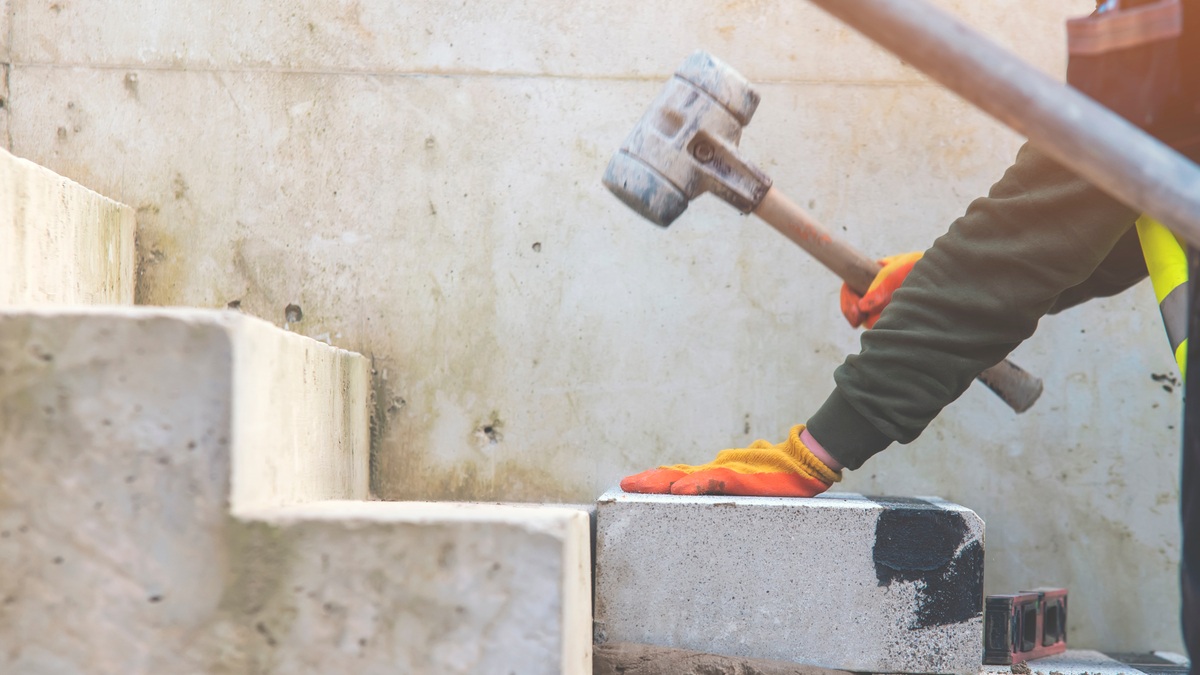
When the entire unit shifts or sinks, we inspect the base to determine whether it needs to be lifted or replaced. Sometimes, we can lift the precast unit slightly and add compacted gravel or piers underneath to stabilize it.
If settling is severe, we may recommend removing and replacing the unit with a new precast set or poured-in-place concrete stairs built on a reinforced footing. This approach is fundamental to successfully building concrete steps on a steep slope and preventing similar issues.
When Repairs Aren’t Enough
Sometimes, repairing damaged precast concrete steps isn’t the best option. Replacement may be the safest and most cost-effective solution if your steps have major cracks running through the entire unit or the hollow core is compromised. We prioritize long-term durability when assessing any repair, ensuring our solution will endure over time. Our approach involves a thorough analysis of the specific issue at hand, considering factors such as the extent of damage, the age of the item, and the potential costs associated with repair and replacement.
By weighing the pros and cons of fixing versus entirely replacing an item, we aim to offer practical advice tailored to your unique situation. A qualified precast concrete steps contractor in Minnesota will meticulously evaluate your needs. If a repair is likely to provide a reliable and cost-effective solution, we’ll recommend that option. Conversely, if we determine that a replacement would be more beneficial regarding longevity and performance, we’ll guide you toward making that choice. Ultimately, we aim to help you make informed decisions that align with your needs and budget.
Restore the Safety and Appearance of Your Concrete Steps Today
Your front steps are one of your home’s most heavily used parts. Keeping them safe, level, and crack-free protects your family and maintains curb appeal. Whether your precast stairs need patching, reinforcement, or a complete reset, we can help guide you toward the right solution. Contact Richfield Concrete today to schedule an assessment of your precast steps. We bring expert craftsmanship, honest guidance, and reliable repairs that last.